How to Backtest 0DTE XSP Strategies (When XSP Data Isn't Good Enough)
XSP is too illiquid to backtest well, so we test on SPX with realistic fees and no exits, then size down. Here is a 4-trade 0DTE XSP portfolio built that way.
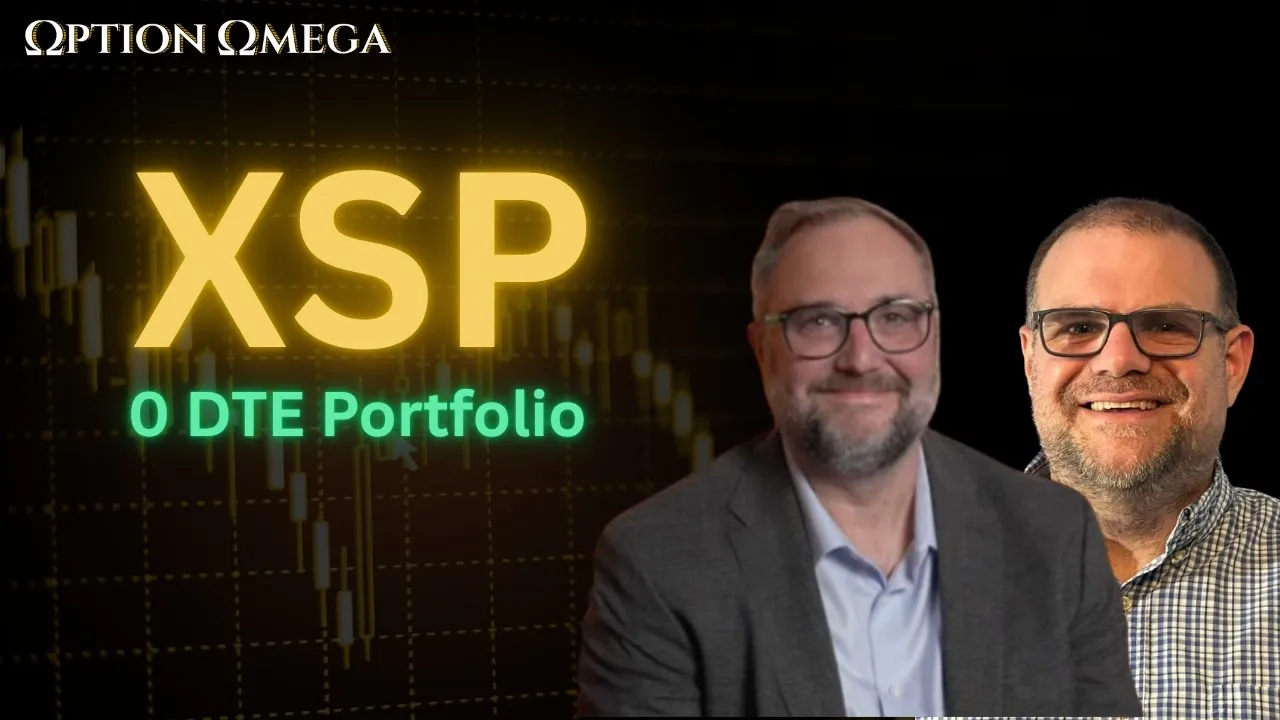
We get asked all the time to backtest XSP. We don’t, because the options are too illiquid for us to have confidence in a backtest. But that does not make backtesting useless for XSP traders. Matt and Troy walk through how to use SPX backtests to build an XSP portfolio, and the 4-trade 0DTE portfolio Matt built that way, including one trade that risked about $3,300 on SPX and about $300 on XSP.
The point of this concept video, as Troy put it at the end, is that XSP is in play more than people think, with real benefits and some drawbacks.
Why we don’t backtest XSP
In Matt’s view, good options backtests are a solved problem, but only for a highly liquid ticker, and XSP doesn’t meet the bar. As he put it, the whole point of a backtest is being able to have confidence in it, and with little liquidity and very wide bid/ask spreads, you can’t have confidence in the fills.
The workaround: backtest on SPX, then size down
XSP is 1/10 the size of SPX, so Matt backtests the SPX version of each trade and adjusts the assumptions to match XSP. His ground rules:
| Rule | What he does |
|---|---|
| Underlying | Backtest on SPX; keep XSP’s 1/10 size in mind |
| Fees | $1.50 to open in the SPX backtest. He pays about 15 cents on XSP when automating, so 10x that should get the backtest in the ballpark. |
| Slippage | Set per trade; the short iron condor gets more because it enters later in the day, when XSP liquidity thins |
| Exits | None. Every trade is held to expiration. |
Troy noted later in the video that XSP has drawbacks around things like stop losses, alongside its real benefits.
Why XSP instead of SPY?
SPY is the most liquid options ticker in the world by volume, so why not just use it? Two reasons:
- Assignment. SPY options are American style and can be assigned at any time. XSP is European style and cash settled, so there is no assignment risk.
- Taxes. For US traders, XSP gets Section 1256 treatment, which comes with a long-term capital gains advantage.
In Matt’s words, if SPY had those two features, “I think everybody would trade SPY.” Compared with SPX, the advantage is size.
The 4-trade 0DTE XSP portfolio
Matt kept it simple:
| Trade | Type | When |
|---|---|---|
| Put hedge | Debit | Every day, inside a VIX range |
| Thursday strangle | Debit (long strangle) | Thursdays, on VIX triggers |
| The McRib | Debit (reverse iron condor) | 4 days a week, on VIX and RSI filters |
| Bread-and-butter iron condor | Credit (short iron condor) | 5 days a week, below a VIX level |
Matt set up the McRib and the short iron condor as the “big boys”; the put hedge and the strangle sit around the fringes.
Trade 1: The daily put hedge
This is the simplest one. It buys a put costing about 2 cents (with slippage on top) every day. The only filter is a VIX range: it skips days with VIX below 15, when there is little threat in the market, and above 22, when there is a lot. It trades the middle, which is where VIX sits most of the time.
Looked at in isolation, Matt said, most people wouldn’t trade it. It won 147 times out of 567. Troy’s reaction: that low count makes him want to look at what the winners looked like, because the P&L is positive, driven by a massive winner.
That’s the trick with a hedge, as the two of them discussed: someone who started it in June 2025 might turn it off six months later and miss the big winners.
Trade 2: The Thursday strangle
This trade buys a strangle on Thursdays. It checks twice a day, so it can go on twice, and it looks at a VIX overnight move and a VIX intraday move. After entry it does nothing: no exit.
The equity curve is squiggly. Troy’s point: people assume you have to sell premium, and one thing Option Omega learned early on is that this may not be the case. The question is whether you can trade through the flat stretches.
Matt said he ran over 200 variations of this backtest while preparing the video, changing times, legs and VIX settings, and kept seeing the same Thursday behavior since dailies. In his view, that makes it a concept rather than a curve fit, though many similar variations don’t rule out overfitting on their own. He encouraged viewers to test their own versions.
Trade 3: The McRib
The McRib is a 0DTE reverse iron condor (a long iron condor) that has appeared in many Option Omega videos. It uses the same two concepts as the Thursday strangle, a VIX overnight move and a VIX intraday move, measured differently. It adds one more filter: RSI between 30 and 70, so the market is neither frothy nor scared.
Troy called its equity curve “a pretty smooth line.” One of the hosts, who had traded it on XSP the day before, added a reminder: it’s an expensive trade that often goes to one of the wings, but it can go to zero.
This is where XSP’s size matters most. One McRib trade in the SPX backtest cost about $3,300. On XSP, the same trade is about $300.
Trade 4: The bread-and-butter iron condor
The one credit trade sells a narrow iron condor every day when VIX is below a set level, with a bit more put skew. It enters later in the day, and that is when XSP liquidity gets thin (“the more it looks like the Sahara,” in Matt’s words), so it carries more slippage.
Its line has flat stretches, and it was basically flat for 2026 at the time of the video. Matt’s take: “That’s the beauty of a portfolio though.”
Where the profit came from
Looking at the P&L by trade:
- Since dailies: most of the profit came from the McRib and the short iron condor, the trades that go on most often. The strangle and the put hedge still had some outsized winners.
- The two years before the video: the short iron condor caught up, and the long and short condors contributed about equally.
That’s what Matt meant by “you don’t have to pick a side.” This portfolio is three debit trades and one credit trade, long and short volatility at the same time. With automation, Matt said, there’s no need to choose each morning. XSP is available for automation in Option Omega, and Matt and Troy automate on it themselves. For setup details, see XSP automation: what to know first.
Sizing for a $25,000 account
The portfolio starts at $25,000 and resets to the starting funds each month. Matt’s allocations:
| Trade | Allocation |
|---|---|
| McRib | One lot |
| Put hedge | One lot |
| Short iron condor | 5% |
| Thursday strangle | 3% |
He also showed a second approach: raise the allocations and cap trades at one lot, since many XSP traders would reasonably start with one lot. That view smoothed the curve and removed the large 2024 run-up, which had come from the long trades. It still did okay for 2026 at the time of the video.
Troy pointed to the SPX numbers: a McRib trade costing about $3,300 and a strangle with a $2,600 loss. In his view, losses that size on a 0DTE trade keep many traders from taking long-gamma opportunities, and XSP allows sizing more appropriately to an account.
Key takeaways
- We don’t backtest XSP because its liquidity is too thin for us to have confidence in the results.
- Matt backtests on SPX instead, with fees and slippage scaled to XSP and no exits, then sizes down by 10x.
- XSP’s advantages over SPY are cash settlement (no assignment) and Section 1256 treatment; over SPX, it is the size.
- Mixing debit and credit trades means not having to pick a side; in the two years before the video, the long and short condors contributed about equally.
- Long-gamma trades are squiggly. Matt looks at longer backtest periods to see whether he’d be comfortable trading through the drawdowns.
Build your own
Troy suggests using these four as a starting point: flip the mix to three short and one long, play with the concepts, and keep testing. The shared portfolio is in the tests-strats thread on the Option Omega Discord. Start a free trial to run the SPX versions yourself.
Watch the full video: We Don’t Backtest XSP (So We Did This Instead) 0 DTE XSP.
Backtest results are hypothetical and do not guarantee future performance. Options trading involves substantial risk.