Beyond 0DTE Iron Condors: RIC, Stalingrad and Scorpion Backtests
Three backtested concepts beyond 0DTE iron condors (a long-vol RIC, the Stalingrad double calendar and the Scorpion ratio spread) and how to stress-test them.
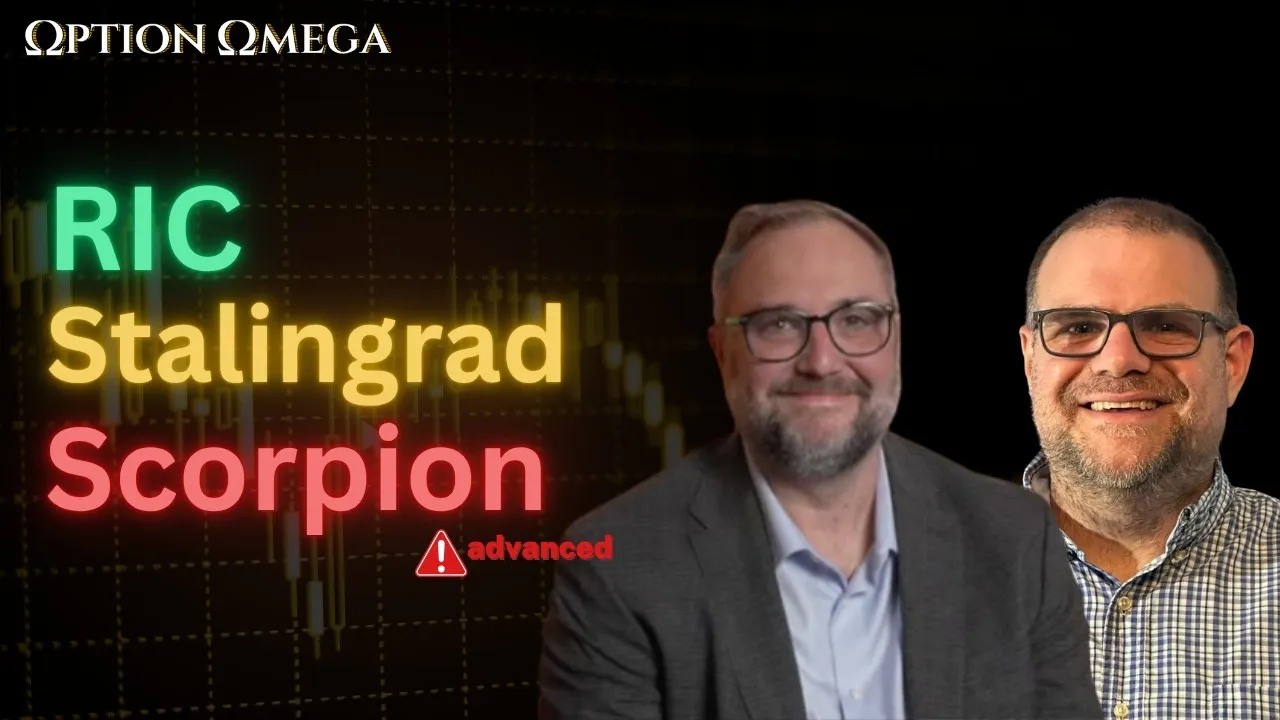
Troy’s observation is that a lot of traders hear “0DTE” and think of one thing: selling iron condors. So he and Matt ran three very different backtests in this June 2026 episode, including a 0DTE reverse iron condor that is long volatility and won about two-thirds of the time in a backtest covering more than four years.
Matt’s point was about how they tested them. “You’re not curve fitting a specific thing,” he said. “You’re testing a concept.” Instead of one carefully tuned setup, he changed the inputs live to see how sensitive each result was to them. Similar results across nearby settings give more context, though they don’t rule out overfitting.
Why look beyond the iron condor
The episode started from the Tammy Chambless MEIC interview, which is all about 0DTE spread selling. Troy’s view is that Tammy has shown that strategy works over time, but that the 0DTE universe is much bigger. He added that some trades look like they should work against each other in theory, yet help each other when traded together.
Concept one: the RIC, a long-volatility 0DTE trade
A RIC is a reverse iron condor. It buys the spreads an iron condor would sell, so it is long volatility. Option Omega content has covered many versions over the years. Matt pulled one he had not optimized; he said there are better ones.
The setup, as described on the show:
- Underlying: SPX, 0DTE
- Days: every day except Monday
- Entry: the market gets about two hours in the morning to settle first
- Signal: VIX down overnight and VIX moving down during the day
- Exit: none. It is held to expiration (“ride or die”)
- Data: since SPX daily expirations, more than four years at the time of the video
In the backtest, it won about two-thirds of the time. Matt changed the deltas live, including moving the strikes closer to the money, and every version he showed stayed green. Capture rate stayed around 13% or better in the versions he mentioned, and the highest he saw was about 17.3%. In all, they looked at about 27 variations, and the backtester ran each one in seconds.
Troy said that’s what they look for: any strategy might win, but if tweaking one setting turns it into a failure, it is fragile. In the variations they ran here, the results stayed positive as the variables changed.
Small accounts: running it on XSP
In the trade log, Troy noted debits in the low thousands of dollars per trade, a lot for a small account. Matt’s answer was XSP, which is a tenth of the size. He adjusted the backtest’s strike rounding and fees to reflect XSP. His reason for saying it could be automated on XSP: the trade doesn’t have an exit. At the time, Matt and Troy said they had been converting their SPX long-gamma trades into automated XSP trades. For more, see XSP automation: what to know first, and for another long-vol structure, the RIC in spread premium targeting.
Matt’s take on the claim that “0DTE is gambling”: those people “have never met RIC.”
Concept two: Stalingrad, the double calendar grind
The second concept is not 0DTE at all, and that is part of the point. Stalingrad is a double calendar Troy and Matt have been working with for about a year and a half to two years. Troy named it after the battle because it is a grind: “this thing just keeps going,” often longer than you think it should.
- Underlying: QQQ
- Data: about 450 trades since daily expirations
- Costs: QQQ’s own fees, commissions and slippage, which differ from SPX
- Entry: a window of several hours, looking for a VIX move down plus a short/long trigger
Once in the trade, the goal is to get under a profit tent. Troy showed this with the Model this test button, which opens the backtest in modeling with its payoff diagram. Stalingrad has several rails to manage it:
- A timed rail
- A short/long rail for when the tent sags
- A rail for each leg if it gets tested too far, so price does not move too far past the profit tent
Troy added that early on, people assumed Option Omega only backtested double calendars because the founders trade so many of them. He said the Option Omega Discord has many traders who teach DCs throughout the day.
Concept three: the Scorpion, an advanced put ratio spread
The Scorpion is a multiple-entry put ratio spread. The “R” for ratio is the stinger. Matt was clear that this is not a small-account or beginner trade. It is a 100-wide backtest with a lot of risk.
- Underlying: SPX
- Structure: a 100-wide put spread with a 40-delta short, plus a second long leg that makes it a ratio spread
- Trigger: a 10-minute EMA, a trend-following entry
- Entry times: picked with a randomizer, on purpose. Matt said there are surely better versions; he was showing the concept
Most trades look like normal credit spreads. The trade log showed examples such as selling for $10 and expiring at $1.20, selling for $7.50 and expiring worthless, and some stop losses, such as selling for $10 and stopping out at $30.
The difference is what happens after a stop. The whole put spread closes, but one long put stays open, “dangling.” Every so often, a big move drives that long deep in the money. In about 3,000 backtested trades, that happened 11 times, including one winner of about $11,000. Even with multiple entries per day, two longs paid off on the same day only once, an FOMC day.
Matt changed the deltas live too:
| Short delta | Result |
|---|---|
| 40 (original) | positive |
| 35 | still fine |
| 30 | about 8% capture rate |
| 45 | still about 8% capture rate |
He also said a version works on SPY in the backtest, with caveats (and, he stressed, not as advice): the shorts might need to be exited early, and assignment risk adds headaches. He warned that running stop orders on XSP is its own problem.
Troy’s summary: in the backtest it’s a credit spread that wins most of the time, and on most losses the long never comes into play. But every once in a while, it does.
Long gamma in a headline-driven market
Matt pointed out how often those big Scorpion winners showed up in 2024 and 2025. Troy’s view is that instead of getting blown out when a social media post moves the market, traders could look for trades that showed positive expectancy in a backtest and that benefit from those moves. Troy’s shorthand from the episode: know your Greeks and apply them to the market you are in.
Key takeaways
- 0DTE is not only short premium. The RIC is long volatility and won about two-thirds of the time in a backtest covering more than four years since daily expirations.
- Matt and Troy tested the concept, not one setting. About 27 RIC variations all stayed positive in the backtest, and the Scorpion delta changes Matt ran pointed the same direction.
- The RIC has no exit, which is why Matt suggested it could be automated on XSP for smaller accounts.
- Not every idea is 0DTE. Stalingrad is a QQQ double calendar managed with rails.
- The Scorpion’s extra long produced rare, large winners in the backtest (11 in about 3,000 trades), but it is 100 wide and carries real risk.
Build and break your own concepts
None of these are systems for sale. Matt and Troy ran all three backtests in Option Omega to show the ideas, and each rerun took seconds. Load a concept in the backtester, change the deltas, timing and filters, and see how the results change. For a starting point on the condor side, see how to backtest a 0DTE iron condor on SPX. Start a free trial or join the Discord.
Watch the full video: Beyond 0DTE Iron Condors: RIC, Stalingrad & The Scorpion.
Backtest results are hypothetical and do not guarantee future performance. Options trading involves substantial risk.