From Wall Street Bets to Risk Manager: Tom Lei on SPX Options
Tom Lei went from WSB-era long calls to SPX calendars and double diagonals: two risk pillars, why he rarely worries about win rate, and his backtested target.
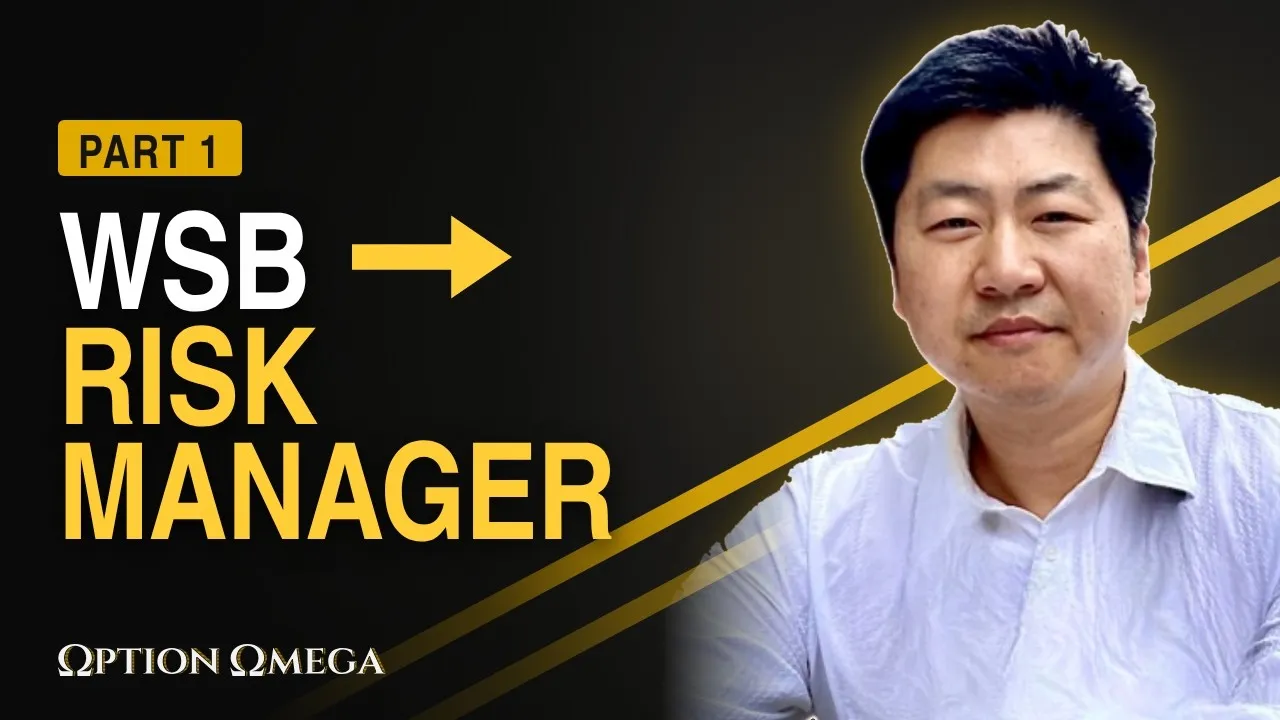
Tom Lei has traded options for about six years. Dan Sheridan, who traded for years in the pits, says he would have guessed 20, and credits part of that to the OO community and today’s backtesting data. Tom traded constantly in those early years, logged everything, and leaned on two pillars a veteran mentor gave him: manage risk at entry, and care about risk and reward, not win rate.
Dan wanted to hear the journey: how Tom went from Wall Street Bets to calendars and double diagonals on SPX in that time, and what changed once he started backtesting. On automation, the two of them see things differently.
From engineer to full-time trader
Tom studied electronic engineering, worked in IT retail for 13 years, and has always been an entrepreneur. He retired at 38. He had invested in businesses and property, but didn’t trust or understand stocks.
His first idea was to put his money into a hedge fund for a yield. That way of thinking, he says, doesn’t carry over to trading. “Do not think in yield. Once you start thinking yield, you neglect risk.” Options trading, in his view, has almost nothing to do with investing.
He started trading options seriously in 2020, like many people stuck at home. He followed tastytrade and took SMB University courses, but always felt something was missing from the strategies he was learning. Then he found his mentor, a trader with about 40 years of experience.
What his mentor taught him
The first lesson was about knowing who else is in the market: “If you walk into a room and you can’t spot the idiot, you’re the idiot.” The mentor also pushed Tom to build his own trading philosophy, which is now very different from the mentor’s.
Two rules stuck hardest. Tom calls them pillars.
Pillar 1: Manage risk at entry
For Tom, this means debit trades or spreads, so the maximum loss is known before the trade goes on. He has steered away from relying on stops for that. His mentor had seen traders lose huge sums, including on short VIX positions, and told him that what happened before will happen again.
Tom has never sold naked options. Position sizing came later.
Pillar 2: Risk and reward over win rate
For a long time Tom favored low win rate, high max profit trades. He still leans that way. He points to the trade that wins 99% of the time until one loss wipes it out, and says the backtesting community sees those every day.
His math: “If I have a 56% win rate, that’s good enough for me,” as long as the average win is bigger than the average loss, the max win is large and the max loss is limited. He and Matt from Option Omega both have trades with very low win rates that have a nice payday about four times a year, and that’s good enough for them.
He spent a year and a half under another mentor selling put spreads with a win rate in the 70s, and says nobody ever made any money. His explanation is the math: selling out-of-the-money puts at roughly 10-to-1 risk to reward, even with stops, he expects a few big losses.
Dan agreed. In his years in the pits, he says, about 90% of the conversation was about risk.
The WSB era and a calendar that filled for zero
Tom traded GameStop on Wall Street Bets in late 2020 and 2021, starting about four months before the squeeze. Like most beginners, he started with long calls. At one point he was trading 150 tickers, at least 10 hours a day.
Around late 2020 he started trading calendars, including a call calendar on GME. Front-week implied volatility was running around 800% to 1,200%, so the front-week premium was higher than the same strike a week later. The calendar filled for zero, and with no margin required he could have put on a huge number of contracts. Then the stock blew through his strike by about 200 points intraday, and he spent the day trying to get out.
Calendars taught him how options are priced, beyond the Greeks. One example: on some ETFs, such as gold and XLE, a monthly and a quarterly expiration sit close together. Those calendars can cost a penny or two, so the debit risk is tiny, and if price moves toward the strike they can reach 15 or 20 cents, which he calls a 10x trade.
Why he moved to SPX
Tom traded SPY and QQQ for a while, but once he started trading SPX he quickly stopped everything else. The reason, he said, is liquidity for multi-leg trades: even an Nvidia strike with about 600,000 contracts of volume that day had poor spreads for a four-legged trade compared with SPX.
Coming around to backtesting
Tom calls himself a latecomer. He was told about backtesting about three and a half years before the interview, tried Option Omega when it was very different, and wasn’t impressed. Many veterans he respects distrust backtests, because they can be made to look good.
He came to Option Omega right after Liberation Day 2025. He doesn’t remember losing much, which he puts down to always being well sized, but he wanted to see what events like that, including the roughly 9.5% up day on April 9, would do to his trades.
His view of the tool now: you can still use the Option Omega backtester to build ridiculous backtests, but if you know how to use it, it becomes very useful.
Absolute risk: what if the market goes to zero?
His main message is risk management, and he means more than a 500-point move. In his community they talk about absolute risk: what happens if the market goes to zero. It may never happen, but he wants to withstand it. If that day comes, the loss is not only money. “It will dent your confidence forever. So you’ve lost a money-making machine.”
Double calendars and finding the real profit target
Tom has traded double calendars and double diagonals for a long time, and says the hardest question is the profit target. He traded a Friday-to-Monday double diagonal for years. In his words, it can make 400% on the debit, but it can also lose a lot.
He used to trade them 10 wide, where $1,000 is the margin risk, and likes his debit and his margin to be about the same. Within a week of backtesting that trade on Option Omega, he found that a profit target of 25% to 30% was “the perfect target” for it. He didn’t go through the test period or settings in this conversation.
Tom’s reasoning is a numbers trade-off. A 5% or 10% target is easy to hit, but on a 10-wide trade, a big move can still mean a 100% loss. Tom noted that Dan has long used a 10% target. Dan admitted he tended to exit double calendars too early, and said seeing data on 30% or 40% targets, which he compared to the movie Moneyball, is new for him.
Dan also compared a diversified double calendar book, with different durations and widths, to a MEIC on a longer time frame. Tom agreed. For a deeper look at a portfolio built mostly from double calendars, see Dan Sheridan and David Romeo on correlation and tail risk.
Trading less, and automation as an extension
Tom says he is comfortable with where he is. He is trying to do less, not more, and has been sizing down almost non-stop since 2022.
On automation, he and Dan see it differently:
| Tom’s view | Dan’s view | |
|---|---|---|
| What automation is for | An extension of his trading, not a game changer | A fix for the biggest problem he sees in retail traders |
| Why | His time in the market is for observing, not executing. If he is on vacation, he shuts his trades off. | Students who have a bad year usually let three or four trades get away from them. In his view, automated exits help with that discipline problem. |
| Caveat | Automation is never 100% foolproof; tools need refining | He can still override it when he wants |
Tom says he gets a little offended by the idea that someone can sip a margarita, press a button and make millions. “They might be able to, but they shouldn’t be able to.” He does accept that a trader placing 200 trades a day needs a robot.
Dan’s closing point: in the pits, letting a trade run through the short strike more than once or twice meant getting fired. Retail traders have no risk manager and are their own risk manager, which is why he thinks being honest with a community helps keep some sanity.
Key takeaways
- Tom manages risk at entry. He uses debit trades or spreads so max loss is known up front, and has never sold naked options.
- He cares more about risk and reward than win rate. A 56% win rate works for him if average wins beat average losses and the max loss is capped.
- He plans for absolute risk. He wants to be able to withstand the market going to zero, not just a 500-point move.
- Backtests shaped his profit target. For one double diagonal, his backtests pointed him to 25–30% instead of a quick 10%.
- He has been sizing down since 2022. He’s trying to do less, not more.
- They see automation differently. Tom treats it as an extension of his trading; Dan sees it as help for the discipline problems he sees in retail traders.
Test your own calendars
Tom found his profit target by looking at the results of many backtests of the same trade. In Option Omega you can backtest double calendars and diagonals, run an optimization across profit targets, and automate the exits once you trust the rules. Tom’s conversation continues in part 2, on long diagonals.
Watch the full video: From Wall Street Bets to Risk Manager on SPX Options.
This post summarizes a conversation from August 2026 and is educational only. Options trading involves substantial risk.